
See an Overview of this Rating System and Algorithm Here
Top 10
#1 N.T. Wright’s The Resurrection of the Son of God
4.34

This book, third in Wright’s series Christian Origins and the Question of God, sketches a map of ancient beliefs about life after death, in both the Greco-Roman and Jewish worlds. It then highlights the fact that the early Christians’ belief about the afterlife belonged firmly on the Jewish spectrum, while introducing several new mutations and sharper definitions. This, together with other features of early Christianity, forces the historian to read the Easter narratives in the gospels, not simply as late rationalizations of early Christian spirituality, but as accounts of two actual events: the empty tomb of Jesus and his “appearances.”
#2 Peter Williams’ Can We Trust the Gospels?
4.21
The Gospels—Matthew, Mark, Luke, John—are four accounts of Jesus’s life and teachings while on earth. But should we accept them as historically accurate? What evidence is there that the recorded events actually happened? Presenting a case for the historical reliability of the Gospels, New Testament scholar Peter Williams examines evidence from non-Christian sources, assesses how accurately the four biblical accounts reflect the cultural context of their day, compares different accounts of the same events, and looks at how these texts were handed down throughout the centuries…

#3 Timothy Keller’s Encounters With Jesus
4.14
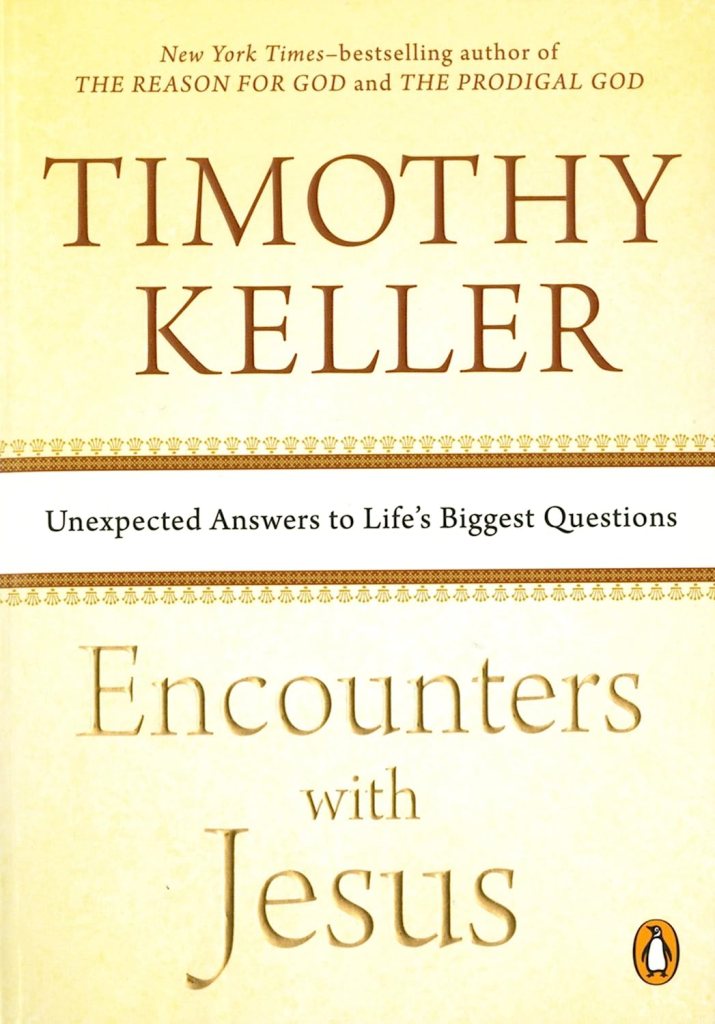
The people who met Jesus Christ in person faced the same big life questions we face today. Like most of us, the answers handed down to them didn’t seem to work in the real world. But when they met Jesus, things immediately started to change for them. It seems he not only had the answers—he was the answer. In Encounters with Jesus, Timothy Keller shows how the central events and meetings in Jesus’ life can change our own lives forever.
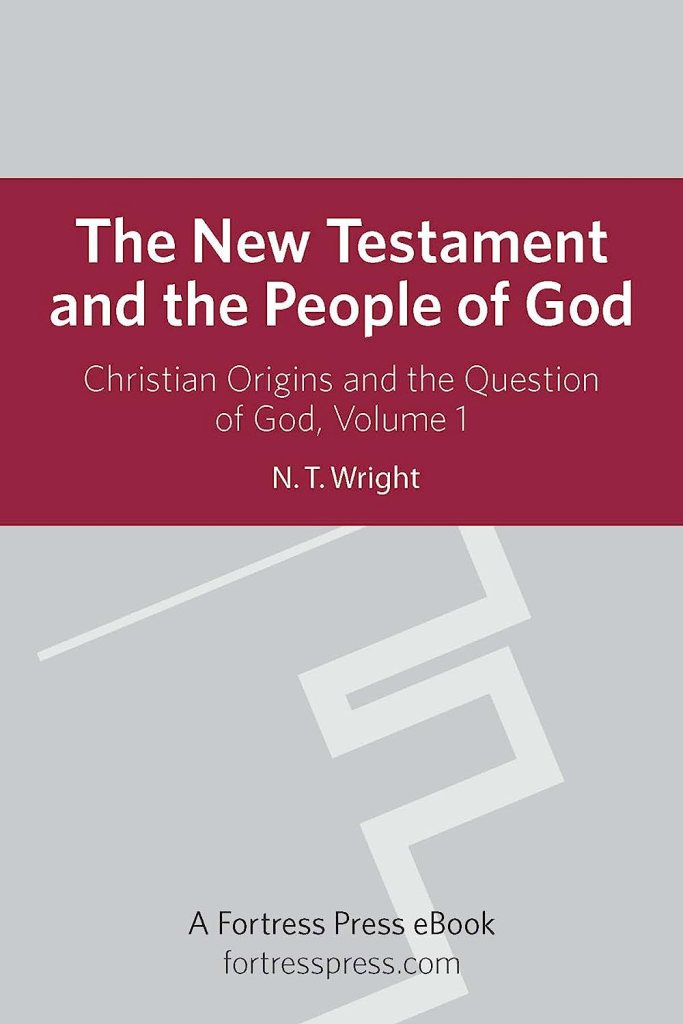
#4 N.T. Wright’s The New Testament and the People of God
4.02
This first volume in the series Christian Origins and the Question of God provides a historical, theological, and literary study of first-century Judaism and Christianity. Wright offers a preliminary discussion of the meaning of the word “god” within those cultures, as he explores the ways in which developing an understanding of those first-century cultures are of relevance for the modern world.
#5 Warner J. Wallace’s Cold Case Christianity
4.0

Written by an L. A. County homicide detective and former atheist, Cold-Case Christianity examines the claims of the New Testament using the skills and strategies of a hard-to-convince criminal investigator. Christianity could be defined as a “cold case”: it makes a claim about an event from the distant past for which there is little forensic evidence. In Cold-Case Christianity, J. Warner Wallace uses his nationally recognized skills as a homicide detective to look at the evidence and eyewitnesses behind Christian beliefs…
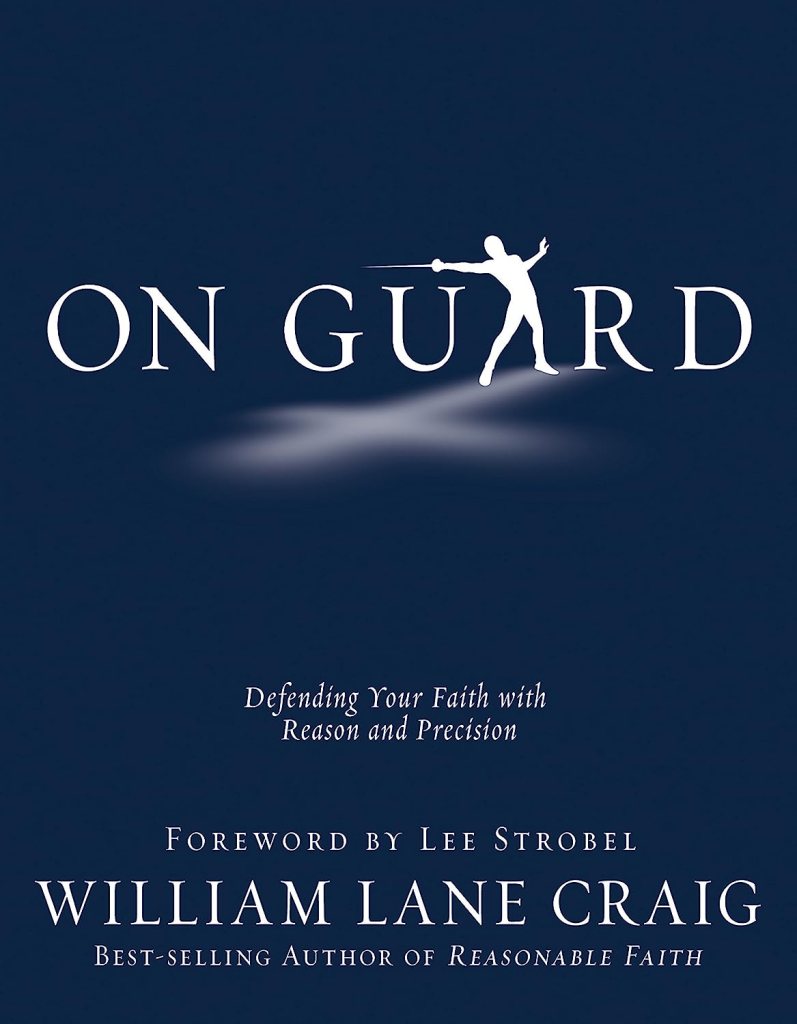
#6 William Lane Craig’s On Guard
3.95
Renowned scholar William Lane Craig offers a readable, rich training manual for defending the Christian faith. This concise guide is filled with illustrations, sidebars, and memorizable steps to help Christians stand their ground and defend their faith with reason and precision. In his engaging style, Dr. Craig offers four arguments for God’s existence, defends the historicity of Jesus’ personal claims and resurrection, addresses the problem of suffering, and shows why religious relativism doesn’t work. Along the way, he shares his story of following God’s call in his own life…
#7 C.S. Lewis’ Mere Christianity
3.93
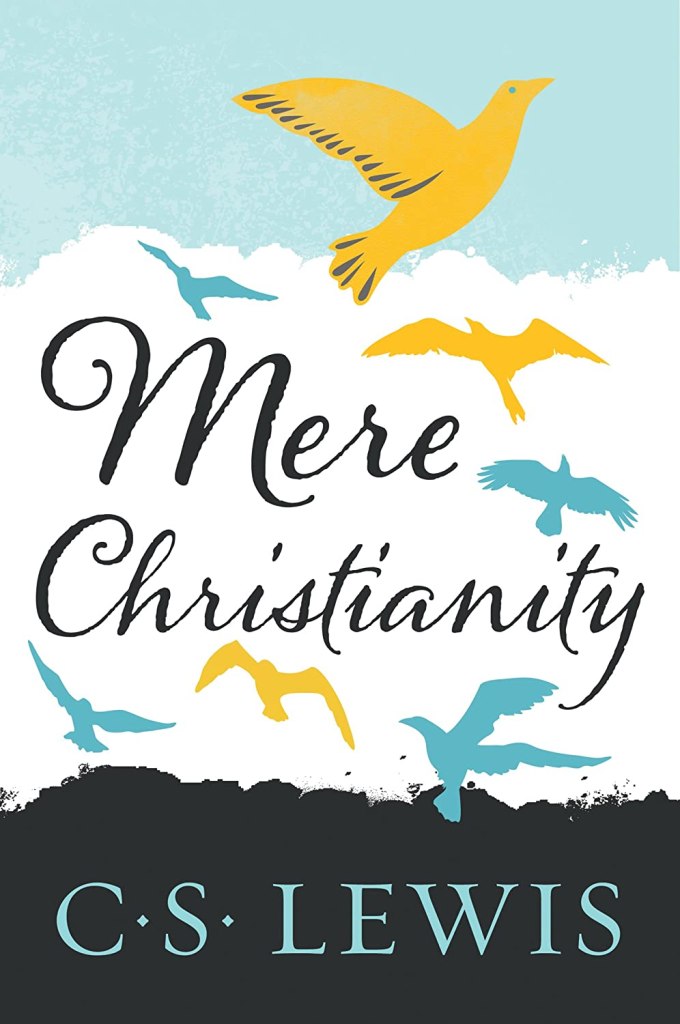
In the classic Mere Christianity, C.S. Lewis, the most important writer of the 20th century, explores the common ground upon which all of those of Christian faith stand together. Bringing together Lewis’ legendary broadcast talks during World War Two from his three previous books The Case for Christianity, Christian Behavior, and Beyond Personality, Mere Christianity provides an unequaled opportunity for believers and nonbelievers alike to hear this powerful apologetic for the Christian faith.
#8 Richard Bauckham’s Jesus and the Eyewitnesses
3.91
‘Jesus and the Eyewitness’ argues that the four Gospels are closely based on the eyewitness testimony of those who knew Jesus. The author challenges the assumption that the accounts of Jesus circulated as ‘anonymous community traditions’, asserting instead that they were transmitted in the name of the original eyewitnesses. To drive home this controversial point, Bauckham draws on internal literary evidence, the use of personal names in first-century Jewish Palestine, and recent developments in the understanding of oral tradition…

#9 Rebecca McLaughlin’s Confronting Christianity: 12 Hard Questions for the Worlds Largest Religion
3.91
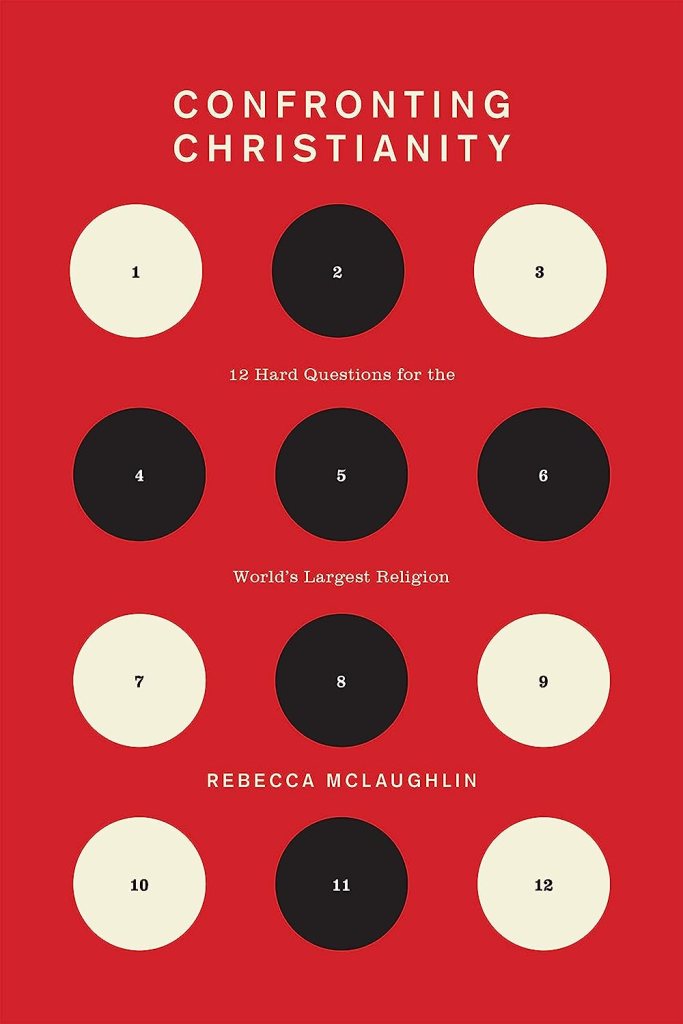
Although many people suggest that Christianity is declining, research indicates that it continues to be the world’s most popular worldview. But even so, the Christian faith includes many controversial beliefs that non-Christians find hard to accept. This book explores 12 issues that might cause someone to dismiss orthodox Christianity—issues such as the existence of suffering, the Bible’s teaching on gender and sexuality, the reality of heaven and hell, the authority of the Bible, and more…
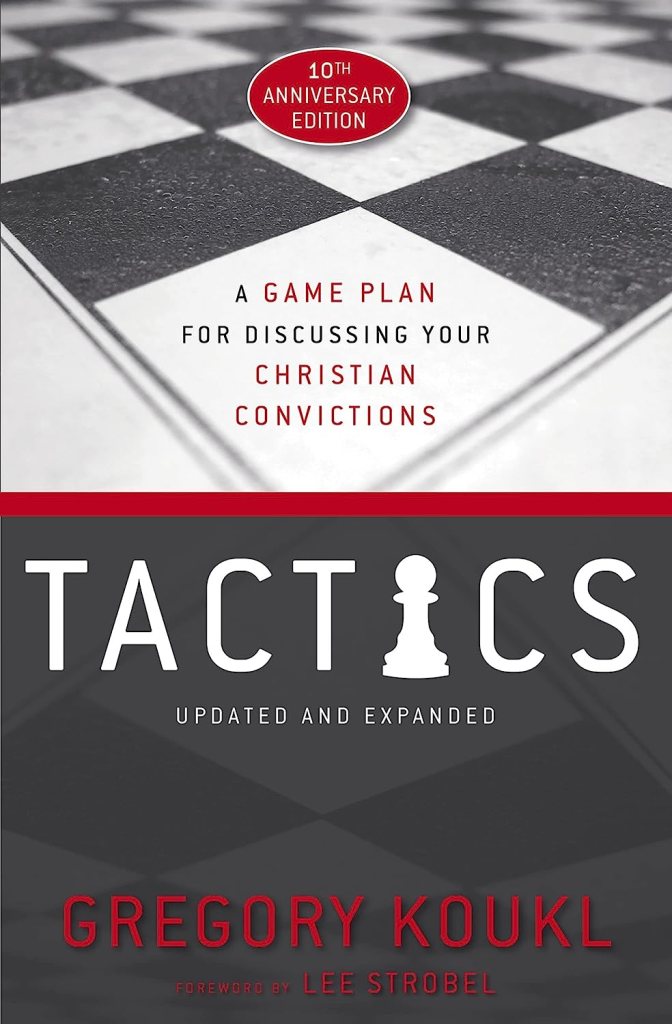
#10 Gregory Koukl’s Tactics: A Game Plan for Discussing Your Christian Convictions
3.85
Tactics provides the game plan for defending your faith and artfully communicating the truths of Christianity with confidence and grace. This expanded anniversary edition of the classic book of Christian apologetics includes updates and expansions of existing tactics, as well as the addition of an all-new tactic and a chapter on Mini Tactics filled with simple maneuvers to aid in discussions. In a culture increasingly indifferent or even hostile to Christian truth, followers of Christ need to be equipped to communicate with those who do not speak their language or accept their source of authority…
Top 30
- Machen, J. Gresham. Christianity & Liberalism. (3.80)
- Craig, William Lane. Reasonable Faith. (3.72)
- Lewis, C.S. God in the Dock: Essays on Theology & Ethics. (3.68)
- McDowell, Josh. More Than a Carpenter. (3.68)
- McDowell, Josh. Evidence that Demands a Verdict. (3.61)
- Keller, Timothy. The Reason for God: Belief in an Age of Skepticism. (3.61)
- Strobel, Lee. The Case for Christ. (3.59)
- Til, Cornelius Van. Defense of the Faith. (3.55)
- Chesterton, G.K. Orthodoxy. (3.55)
- Moreland, J.P. Philosophical Foundations for a Christian Worldview. (3.44)
- Lewis, C.S. The Problem of Pain. (3.44)
- Bahnsen, Greg L. Always Ready: Directions for Defending the Faith. (3.42)
- Colson, Charles. How Now Shall We Live? (3.42)
- Wright, N.T. Simply Christian: Why Christianity Makes Sense. (3.27)
- Lewis, C.S. Miracles. (3.27)
- Copan, Paul. Is God a Moral Monster?: Making Sense of the Old Testament God (3.23)
- Pascal, Blaise. The Pensées. (3.08)
- Geisler, Norman L. Christian Apologetics. (3.06)
- Plantinga, Alvin. God, Freedom, and Evil. (3.04)
- Frame, John M. Apologetics to the Glory of God. (2.74)
 Stumblingstone Press