
See an Overview of this Rating System and Algorithm Here
Top 10
#1 George Saunders’ A Swim in a Pond in the Rain: In Which Four Russians Give a Master Class on Writing, Reading, and Life
4.36

For the last twenty years, George Saunders has been teaching a class on the Russian short story to his MFA students at Syracuse University. In A Swim in a Pond in the Rain, he shares a version of that class with us, offering some of what he and his students have discovered together over the years. Paired with iconic short stories by Chekhov, Turgenev, Tolstoy, and Gogol, the seven essays in this book are intended for anyone interested in how fiction works and why it’s more relevant than ever in these turbulent times…
#2 Douglas Wilson’s Wordsmithy: Hot Tips for the Writing Life
4.17
Wordsmithy is for writers of every sort, whether experienced veterans, still just hoping, or somewhere in between. Through a series of out-of-the-ordinary lessons, each with its own takeaway points and recommended readings, Douglas Wilson provides indispensable guidance, showing how to develop the writer s craft and the kind of life from which good writing comes.
#3 Karen Swallow Prior’s On Reading Well: Finding the Good Life Through Great Books
3.97
Reading great literature well has the power to cultivate virtue. Great literature increases knowledge of and desire for the good life by showing readers what virtue looks like and where vice leads. It is not just what one reads but how one reads that cultivates virtue. Reading good literature well requires one to practice numerous virtues, such as patience, diligence, and prudence. And learning to judge wisely a character in a book, in turn, forms the reader’s own character. Acclaimed author Karen Swallow Prior takes readers on a guided tour through works of great literature both ancient and modern, exploring twelve virtues that philosophers and theologians throughout history have identified as most essential for good character and the good life…
#4 Mark Forsyth’s The Elements of Eloquence
3.93
From classic poetry to pop lyrics, from Charles Dickens to Dolly Parton, even from Jesus to James Bond, Mark Forsyth explains the secrets that make a phrase—such as “O Captain! My Captain!” or “To be or not to be”—memorable.
In his inimitably entertaining and wonderfully witty style, he takes apart famous phrases and shows how you too can write like Shakespeare or quip like Oscar Wilde. Whether you’re aiming to achieve literary immortality or just hoping to deliver the perfect one-liner, The Elements of Eloquence proves that you don’t need to have anything important to say—you simply need to say it well…
#5 Frederick Buechner’s Telling the Truth: The Gospel as Tragedy, Comedy, and Fairy Tale
3.89

A fresh, creative look at the underlying meaning of the Gospels that stresses the many dimensions of God’s relationship to humanity.
#6 Stephen King’s On Writing: a Memoir of the Craft
3.89
Immensely helpful and illuminating to any aspiring writer, this special edition of Stephen King’s critically lauded, million-copy bestseller shares the experiences, habits, and convictions that have shaped him and his work.
“Long live the King” hailed Entertainment Weekly upon publication of Stephen King’s On Writing. Part memoir, part master class by one of the bestselling authors of all time, this superb volume is a revealing and practical view of the writer’s craft, comprising the basic tools of the trade every writer must have…

#7 C.S. Lewis’ On Stories and Other Literature
3.78

C. S. Lewis—the great British writer, scholar, lay theologian, broadcaster, Christian apologist, and bestselling author of Mere Christianity, The Screwtape Letters, The Great Divorce, The Chronicles of Narnia, and many other beloved classics—was a professor of literature at Oxford University, where he was known for his insightful and often witty presentations on the nature of stories. This collection assembles nine essays that encapsulate his ideas about fiction, including “On Stories,” “The Death of Words,” and “On Three Ways of Writing for Children,” as well as eleven pieces that were unpublished during his lifetime.
#8 C.S. Lewis’ The Discarded Image: An Introduction to Medieval and Renaissance Literature
3.76
In The Discarded Image, C.S. Lewis paints a lucid picture of the medieval world view, providing the historical and cultural background to the literature of the Middle Ages and Renaissance. It describes the “image” discarded by later years as “the medieval synthesis itself, the whole organization of their theology, science and history into a single, complex, harmonious mental model of the universe.” This, Lewis’s last book, has been hailed as “the final memorial to the work of a great scholar and teacher and a wise and noble mind.”

#9 Robert Alter’s The Art of Biblical Narrative
3.74
Renowned critic and translator Robert Alter’s The Art of Biblical Narrative has radically expanded our view of the Bible by recasting it as a work of literary art deserving studied criticism. In this seminal work, Alter describes how the Hebrew Bible’s many authors used innovative literary styles and devices such as parallelism, contrastive dialogue, and narrative tempo to tell one of the most revolutionary stories of all time: the revelation of a single God. In so doing, Alter shows, these writers reshaped not only history, but also the art of storytelling itself.
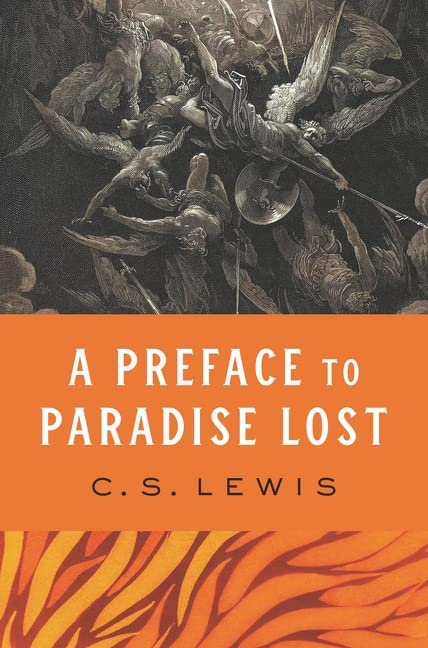
#10 C.S. Lewis’ A Preface to Paradise Lost
3.74
In Preface to Paradise Lost, the Christian apologist and revered scholar and professor of literature closely examines the style, content, structure, and themes of Milton’s masterpiece, a retelling of the biblical story of the Fall of Humankind, Satan’s temptation, and the expulsion of Adam and Eve from the Garden of Eden. Considering the story within the context of the Western literary tradition, Lewis offers invaluable insights into Paradise Lost and the nature of literature itself, unveiling the poem’s beauty and its wisdom…
Top 30
- Campbell, Joseph. The Power of Myth. (3.74)
- Buxton, Richard. The Complete World of Greek Mythology. (3.70)
- Zinsser, William. On Writing Well: The Classic Guide to Writing Nonfiction. (3.70)
- Cron, Lisa. Story Genius: How to Use Brain Science to Go Beyond Outlining and Write a Riveting Novel (Before You Waste Three Years Writing 327 Pages That Go Nowhere) (3.65)
- Lewis, C.S. An Experiment in Criticism. (3.61)
- Clark, Roy Peter. Writing Tools: 50 Essential Strategies for Every Writer. (3.57)
- Strunk Jr., William. The Elements of Style. (3.57)
- McCoy, Daniel. The Viking Spirit: An Introduction to Norse Mythology and Religion. (3.55)
- Lewis, C.S. Of Other Worlds: Essays and Stories. (3.53)
- Reinke, Tony. Lit!: A Christian Guide to Reading Books. (3.53)
- Ahrens, Sönke. How to Take Smart Notes: One Simple Technique to Boost Writing, Learning and Thinking – for Students, Academics and Nonfiction Book Writers. (3.53)
- Penn, Joanna. How to Make a Living with Your Writing: Books, Blogging and More. (3.48)
- Campbell, Joseph. The Hero With a Thousand Faces. (3.48)
- Lewis, C.S. The Reading Life: The Joy of Seeing New Worlds Through Others’ Eyes. (3.46)
- Adler, Mortimer J. How to Read a Book. (3.14)
- Jacobs, Alan. Breaking Bread with the Dead: A Reader’s Guide to a More Tranquil Mind. (3.08)
- Jacobs, Alan. The Pleasures of Reading in an Age of Distraction. (3.06)
- Shippey, Tom. The Road to Middle-Earth: How J.R.R. Tolkien Created a New Mythology. (3.06)
- Wolf, Maryanne. Proust and the Squid: The Story and Science of the Reading Brain. (2.82)
- Fadiman, Clifton. The New Lifetime Reading Plan: The Classic Guide to World Literature. (2.75)
 Stumblingstone Press