
See an Overview of this Rating System and Algorithm Here
Top 10
#1 Abu Al-Qasim Ferdowski’s The Shahnameh
4.27
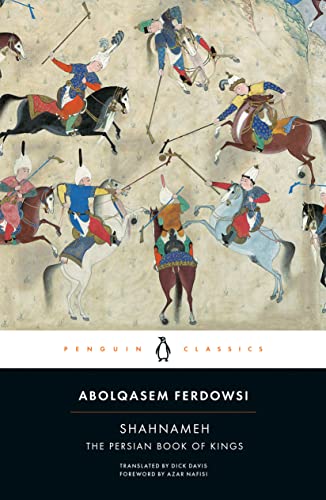
Dick Davis—“our pre-eminent translator from the Persian” (The Washington Post)—has revised and expanded his acclaimed translation of Ferdowsi’s masterpiece, adding more than 100 pages of newly translated text. Davis’s elegant combination of prose and verse allows the poetry of the Shahnameh to sing its own tales directly, interspersed sparingly with clearly marked explanations to ease along modern readers. Originally composed for the Samanid princes of Khorasan in the tenth century, the Shahnameh is among the greatest works of world literature…
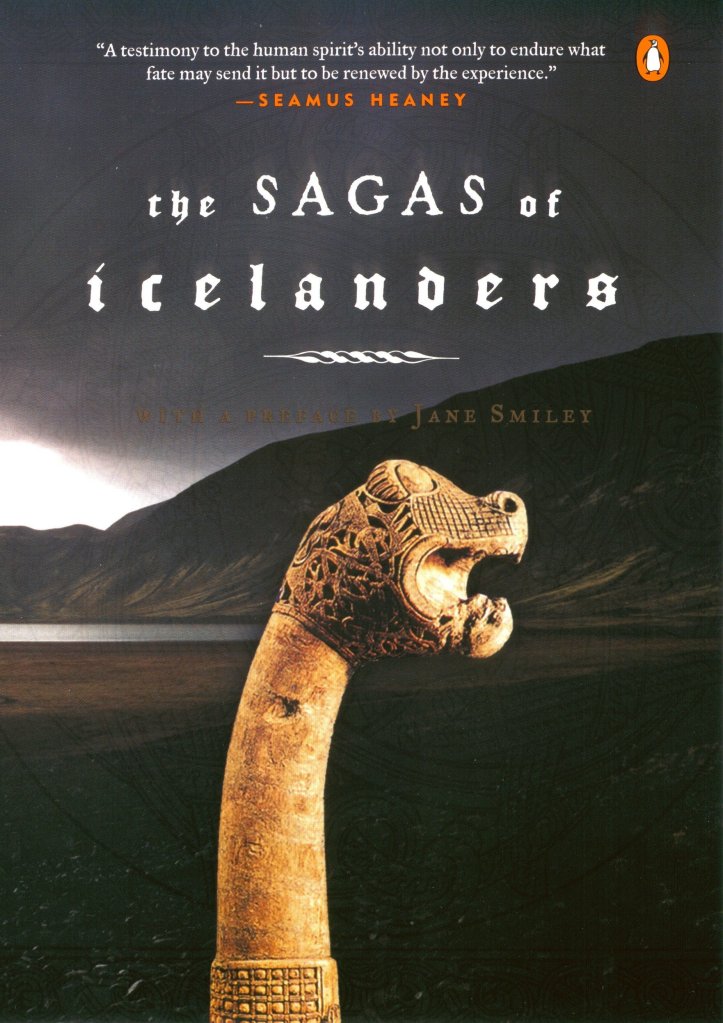
#2 Robert Kellogg’s The Sagas of the Icelanders
3.85
A unique body of medieval literature, the Sagas rank with the world’s greatest literary treasures–as epic as Homer, as deep in tragedy as Sophocles, as engagingly human as Shakespeare. Set around the turn of the last millennium, these stories depict with an astonishingly modern realism the lives and deeds of the Norse men and women who first settled Iceland and of their descendants, who ventured further west–to Greenland and, ultimately, the coast of North America itself. The ten Sagas and seven shorter tales in this volume include the celebrated “Vinland Sagas,” which recount Leif Eiriksson’s pioneering voyage to the New World and contain the oldest descriptions of the North American continent.
#3 The Poetic Edda
3.74

“The poems of the Poetic Edda have waited a long time for a Modern English translation that would do them justice. Here it is at last (Odin be praised!) and well worth the wait. These amazing texts from a 13th-century Icelandic manuscript are of huge historical, mythological and literary importance, containing the lion’s share of information that survives today about the gods and heroes of pre-Christian Scandinavians, their unique vision of the beginning and end of the world, etc…
#4 The Saga of the Volsungs with The Saga of Ragnar Lothbrok
3.59
From the translator of the bestselling Poetic Edda (Hackett, 2015) comes a gripping new rendering of two of the greatest sagas of Old Norse literature. Together the two sagas recount the story of seven generations of a single legendary heroic family and comprise our best source of traditional lore about its members—including, among others, the dragon-slayer Sigurd, Brynhild the Valkyrie, and the Viking chieftain Ragnar Lothbrok.

#5 Kevin Crossley-Holland’s The Norse Myths
3.59
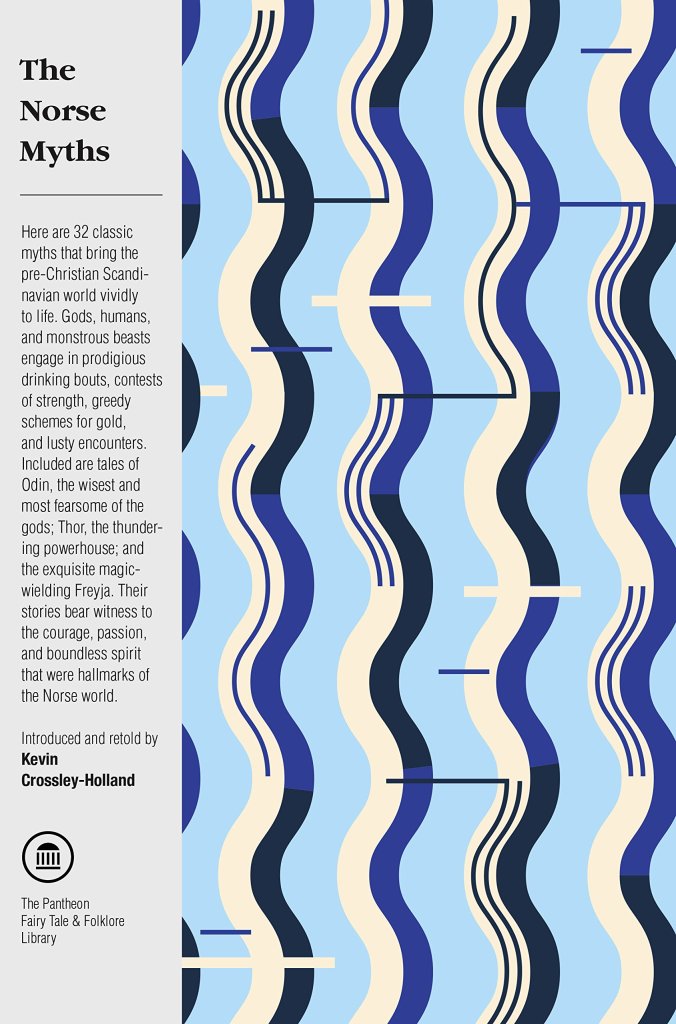
With black-and-white drawings throughout, here are thirty-two classic myths that bring the pre-Christian Scandinavian world to life and bear witness to the courage, passion, and boundless spirit that were hallmarks of the Norse world.
Gods, humans, and monstrous beasts engage in prodigious drinking bouts, contests of strength, greedy schemes for gold, and lusty encounters. Included are tales of Odin, the wisest and most fearsome of all the gods; Thor, the thundering powerhouse; and the exquisite mafic-wielding Freyja.
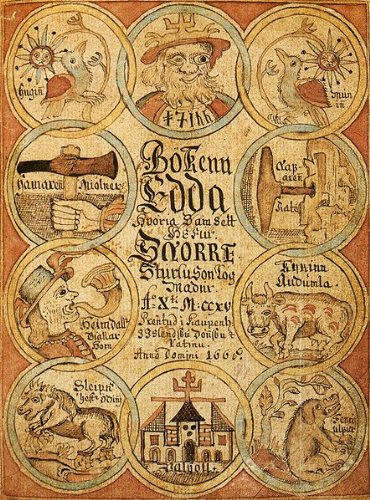
#6 Snorri Sturluson’s The Prose Edda
3.53
Along with the older Poetic Edda, Snorri Sturluson’s Prose Edda is one of the most important works of Old Norse literature. Snorri was a Christian, and the effects of a Christian perspective are apparent in this work, but he nevertheless treats pagan mythology with respect and seriousness. Unlike the Poetic Edda, the Prose Edda is a unified work of a single author, and is intended almost as a historical primer regarding the events described in older Norse works (including the Poetic Edda).
#7 Andrew Lang’s The Red Fairy Book
3.51

The Red Fairy Book” was published in 1890 as the 2nd in Andrew Lang’s “12 Fairy Tale book series.” This edition includes 37 of the stories from French, Russian, Danish, and Romanian tales as well as Norse mythology. Original stories along with black-and-white illustrations.
#8 Thomas Bulfinch’s Mythology
3.48
Bulfinch’s Mythology began as three separate volumes in the 1850s and ’60s. Bulfinch published “The Age of Fable, or Stories of Gods and Heroes” in 1855 and then moved on to publish two more collections: “The Age of Chivalry, or the Legends of King Arthur” in 1858; and “Legends of Charlemagne, or Romance of the Middle Ages” in 1863. When Bulfinch died in 1867, the three volumes were combined and retitled Bulfinch’s Mythology and reprinted in 1881. It has remained one of the most trusted English-language interpretations of Greek and Roman mythology, Arthurian legend, and medieval romance ever since…
#9 Andrew Lang’s The Blue Fairy Book
3.31
The Blue Fairy Book” was published in 1889 as the 1st volume in Andrew Lang’s “12 Fairy Tale book series.” This edition includes all 38 original stories along with their accompanying black-and-white illustrations.
#10 The Kalevala
3.29
The Kalevala is the great Finnish epic, which like the Iliad and the Odyssey, grew out of a rich oral tradition with prehistoric roots. During the first millennium of our era, speakers of Uralic languages (those outside the Indo-European group) who had settled in the Baltic region of Karelia, that straddles the border of eastern Finland and north-west Russia, developed an oral poetry that was to last into the nineteenth century. This poetry provided the basis of the Kalevala. It was assembled in the 1840s by the Finnish scholar Elias Lönnrot, who took `dictation’ from the performance of a folk singer, in much the same way as our great collections from the past, from Homeric poems to medieval songs and epics, have probably been set down.
Top 30
- Aesop’s Fables. (3.29)
- Hamilton, Edith. Mythology. (3.25)
- Coleridge, Samuel Taylor. Kubla Kahn. (3.23)
- Aeschylus. The Oresteia: Agamemnon, The Libation Bearers, The Eumenides. (3.21)
- Green, Roger Lancelyn. Myths of the Norsemen: Retold from the Old Norse Poems and Tales. (3.19)
- Myths from Mesopotamia: Creation, the Flood, Gilgamesh, and Others. (3.19)
- Sir Gawain and the Green Knight, Pearl, and Sir Orfeo. (3.14)
- Sophocles. The Oedipus Cycle: Oedipus Rex, Oedipus at Colonus, Antigone. (3.14)
- Troyes, Chrétien de. Arthurian Romances. (3.10)
- Apollodorus. The Library of Greek Mythology. (3.06)
- The Mabinogion. (3.06)
- Anderson, Douglas A. Tales Before Tolkien: The Roots of Modern Fantasy. (3.04)
- Malory, Thomas. Le Morte d’Arthur: King Arthur and the Legends of the Round Table (3.02)
- Homer. The Illiad. (2.97)
- Knowles, James. The Legends of King Arthur and His Knights (2.93)
- Mabie, Hamilton Wright. Fairy Tales Every Child Should Know. (2.93)
- Lord Dunsany. Time and the Gods. (2.87)
- Lord Dunsany. The King of Elfland’s Daughter. (2.82)
- Milton, John. Paradise Lost. (2.82)
- Apollonius of Rhodes. Jason and the Golden Fleece (The Argonautica). (2.80)
 Stumblingstone Press