
See an Overview of this Rating System and Algorithm Here
Top 10
#1 Siddhartha Mukherjee’s The Gene: an Intimate History
3.93
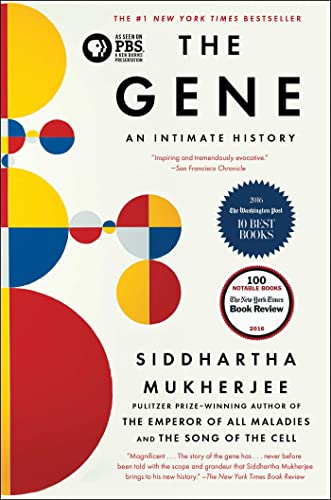
In this biography Mukherjee brings to life the quest to understand human heredity and its surprising influence on our lives, personalities, identities, fates, and choices. Throughout, the story of Mukherjee’s own family—with its tragic and bewildering history of mental illness—reminds us of the questions that hang over our ability to translate the science of genetics from the laboratory to the real world. In riveting and dramatic prose, he describes the centuries of research and experimentation—from Aristotle and Pythagoras to Mendel and Darwin, from Boveri and Morgan to Crick, Watson and Franklin, all the way through the revolutionary twenty-first century innovators who mapped the human genome.
#2 Michael T. Osterholm’s Deadliest Enemy: Our War Against Killer Germs
3.91
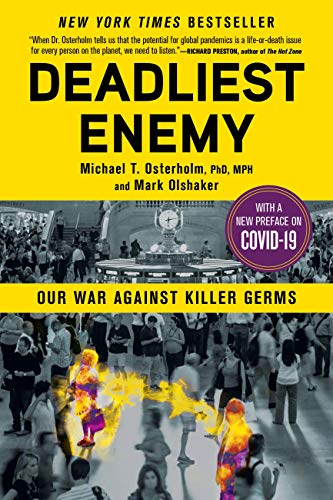
Unlike natural disasters, whose destruction is concentrated in a limited area over a period of days, and illnesses, which have devastating effects but are limited to individuals and their families, infectious disease has the terrifying power to disrupt everyday life on a global scale, overwhelming public and private resources and bringing trade and transportation to a grinding halt. In today’s world, it’s easier than ever to move people, animals, and materials around the planet, but the same advances that make modern infrastructure so efficient have made epidemics and even pandemics nearly inevitable…
#3 Carlo Rovelli’s Reality is Not What it Seems
3.89
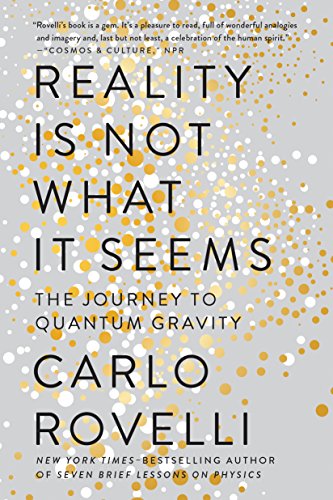
What are the elementary ingredients of the world? Do time and space exist? And what exactly is reality? Theoretical physicist Carlo Rovelli has spent his life exploring these questions. He tells us how our understanding of reality has changed over the centuries and how physicists think about the structure of the universe today. In elegant and accessible prose, Rovelli takes us on a wondrous journey from Democritus to Albert Einstein, from Michael Faraday to gravitational waves, and from classical physics to his own work in quantum gravity. As he shows us how the idea of reality has evolved over time, Rovelli offers deeper explanations of the theories he introduced so concisely in Seven Brief Lessons on Physics..
#4 Siddhartha Mukherjee’s The Emperor of All Maladies: a Biography of Cancer
3.87
Physician, researcher, and award-winning science writer, Siddhartha Mukherjee examines cancer with a cellular biologist’s precision, a historian’s perspective, and a biographer’s passion. The result is an astonishingly lucid and eloquent chronicle of a disease humans have lived with—and perished from—for more than five thousand years. The story of cancer is a story of human ingenuity, resilience, and perseverance, but also of hubris, paternalism, and misperception. Mukherjee recounts centuries of discoveries, setbacks, victories, and deaths, told through the eyes of his predecessors and peers, training their wits against an infinitely resourceful adversary…

#5 Bill Bryson’s The Body: a Guide for Occupants
3.85

Bill Bryson once again proves himself to be an incomparable companion as he guides us through the human body—how it functions, its remarkable ability to heal itself, and (unfortunately) the ways it can fail. Full of extraordinary facts (your body made a million red blood cells since you started reading this) and irresistible Brysonesque anecdotes, The Body will lead you to a deeper understanding of the miracle that is life in general and you in particular.
As Bill Bryson writes, “We pass our existence within this wobble of flesh and yet take it almost entirely for granted.”…
#6 Stephen Meyer’s Signature in the Cell
3.82
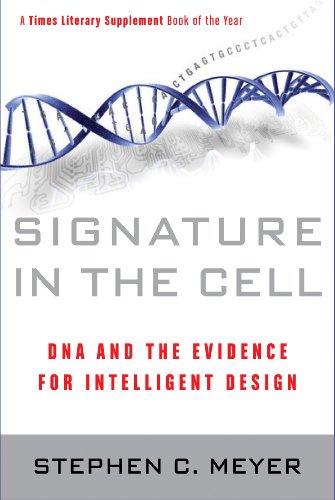
Named one of the top books of 2009 by the Times Literary Supplement (London), this controversial and compelling book from Dr. Stephen C. Meyer presents a convincing new case for intelligent design (ID), based on revolutionary discoveries in science and DNA. Along the way, Meyer argues that Charles Darwin’s theory of evolution as expounded in The Origin of Species did not, in fact, refute ID. If you enjoyed Francis Collins’s The Language of God, you’ll find much to ponder—about evolution, DNA, and intelligent design—in Signature in the Cell.
#7 Peter Brannen’s The Ends of the World
3.82

Our world has ended five times: it has been broiled, frozen, poison-gassed, smothered, and pelted by asteroids. In The Ends of the World, Peter Brannen dives into deep time, exploring Earth’s past dead ends, and in the process, offers us a glimpse of our possible future. Many scientists now believe that the climate shifts of the twenty-first century have analogs in these five extinctions. Using the visible clues these devastations have left behind in the fossil record, The Ends of the World takes us inside “scenes of the crime,” from South Africa to the New York Palisades, to tell the story of each extinction…
#8 Simon Singh’s The Code Book
3.80
Simon Singh offers the first sweeping history of encryption, tracing its evolution and revealing the dramatic effects codes have had on wars, nations, and individual lives. From Mary, Queen of Scots, trapped by her own code, to the Navajo Code Talkers who helped the Allies win World War II, to the incredible (and incredibly simple) logisitical breakthrough that made Internet commerce secure, The Code Book tells the story of the most powerful intellectual weapon ever known: secrecy. Throughout the text are clear technical and mathematical explanations, and portraits of the remarkable personalities who wrote and broke the world’s most difficult codes…

#9 Stephen Hawking’s Brief Answers to the Big Questions
3.80

Stephen Hawking was the most renowned scientist since Einstein, known both for his groundbreaking work in physics and cosmology and for his mischievous sense of humor. He educated millions of readers about the origins of the universe and the nature of black holes, and inspired millions more by defying a terrifying early prognosis of ALS, which originally gave him only two years to live. In later life he could communicate only by using a few facial muscles, but he continued to advance his field and serve as a revered voice on social and humanitarian issues.
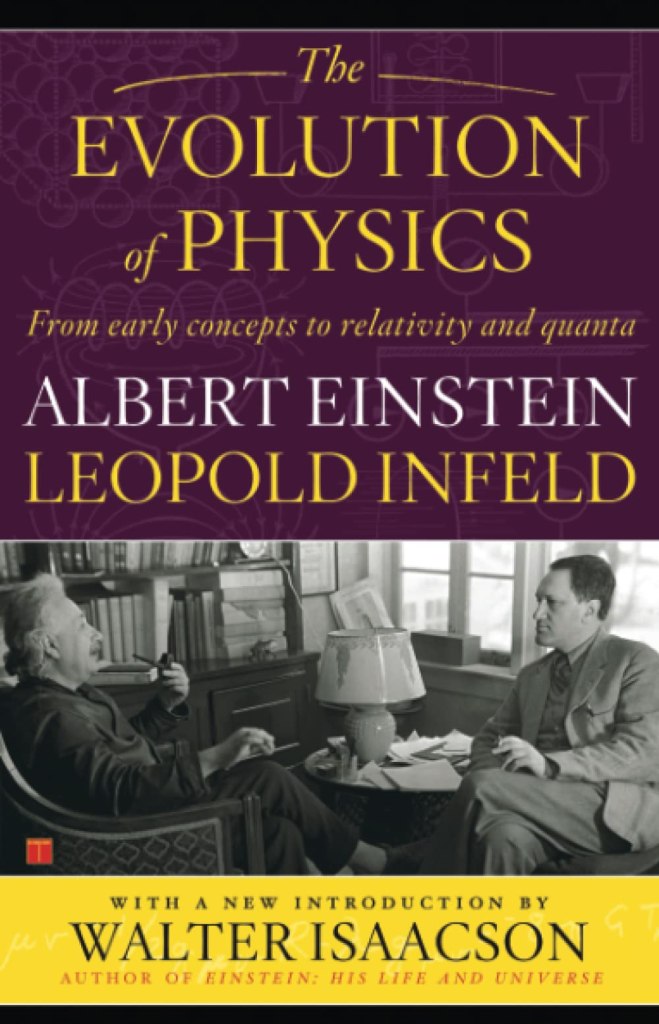
#10 Albert Einstein’s The Evolution of Physics: From Early Concepts to Relativity and Quanta
3.72
Originally published in 1938 by Cambridge University Press, The Evolution of Physics traces the development of ideas in physics, in a manner suitable for any reader. Written by famed physicist Albert Einstein and Leopold Infeld, this latest edition includes a new introduction from modern Einstein biographer, Walter Isaacson.
Using this work to push his realist approach to physics in defiance of much of quantum mechanics, Einstein’s The Evolution of Physics was published to great popularity and was featured in a Time magazine cover story. A classic work for any student of physics or lover of Albert Einstein, The Evolution of Physics can be enjoyed by any and should be celebrated by all.
Top 30
- Berger, Lee. Almost Human: The Astonishing Tale of Homo naledi and the Discovery That Changed Our Human Story. (3.68)
- Macfarlane, Robert. Underland: A Deep Time Journey. (3.68)
- Harari, Yuval Noah. Homo Deus: A History of Tomorrow. (3.65)
- Oakley, Barbara. A Mind for Numbers: How to Excel at Math and Science (Even If You Flunked Algebra). (3.63)
- Pinker, Steven. Enlightenment Now: The Case for Reason, Science, Humanism, and Progress. (3.63)
- Hawking, Stephen. A Brief History of Everything. (3.63)
- Vance, Ashlee. Elon Musk: Tesla, SpaceX, and the Quest for a Fantastic Future. (3.61)
- Brusatte, Stephen. The Rise and Fall of the Dinosaurs: A New History of a Lost World. (3.59)
- Coyne, Jerry A. Why Evolution is True. (3.57)
- Tyson, Neil deGrasse. Cosmic Querries. (3.55)
- Monbiot, George. Feral: Rewilding the Land, the Sea and Human Life. (3.55)
- Meyer, Stephen C. Darwin’s Doubt: The Explosive Origin of Animal Life and the Case for Intelligent Design. (3.51)
- Dawkins, Richard. The Selfish Gene. (3.51)
- Reich, David. Who We Are and How We Got Here: Ancient DNA and the New Science of the Human Past. (3.46)
- Greene, Brian. The Hidden Reality: Parallel Universes and the Deep Laws of the Cosmos. (3.40)
- Tyson, Neil deGrasse. Death by Black Hole: And Other Cosmic Quandaries. (3.40)
- Tyson, Neil deGrasse. Astrophysics for People in a Hurry. (3.38)
- Pääbo, Svante. Neanderthal Man: In Search of Lost Genomes. (3.34)
- Tattersall, Ian. Masters of the Planet: The Search for Our Human Origins. (3.31)
- Ridley, Matt. Genome: the Autobiography of a Species in 23 Chapters. (3.29)
 Stumblingstone Press